Sam Ivin: Supporting Mental Health through Photography and Collage
Sam Ivin is a socially engaged photographic artist who works collaboratively to engage with communities and explore social issues. Ahead of his takeover at New House Art Space in May, we caught up to discuss his upcoming collage workshop and the Mosaic Clubhouse exhibition.
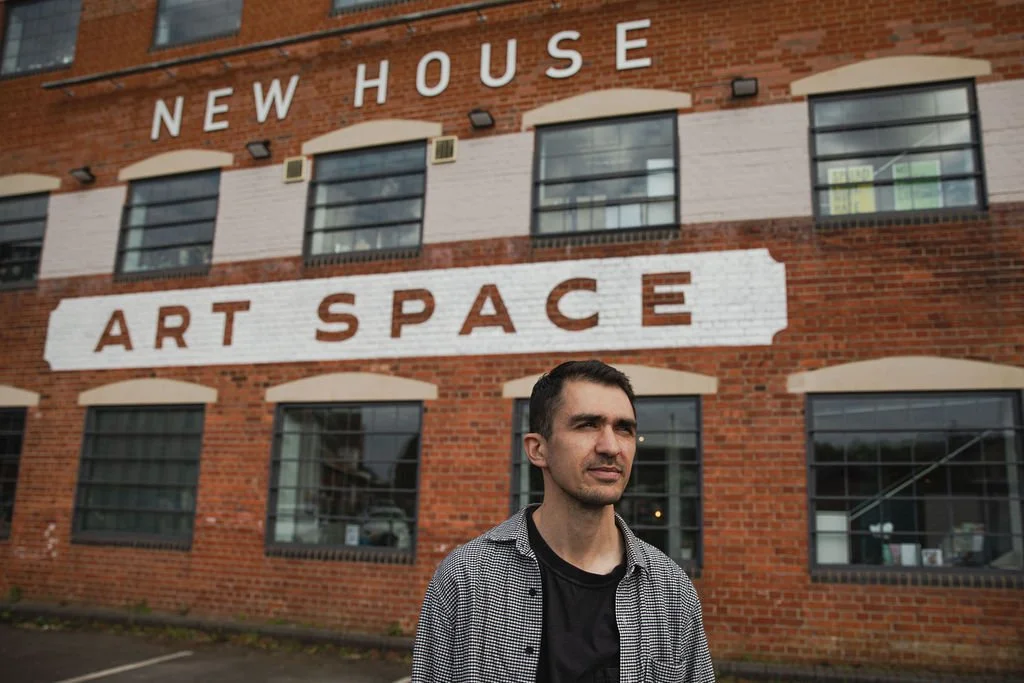
Sam Ivin 2026, © Kayt Webster-Brown www.kaytwebsterbrown.com | Insta @kaytwebsterbrown / @surreyportraits
Holly: How did the project with Mosaic Clubhouse come around?
Sam: Basically a photographer, Owen Harvey - his work’s really strong, it’s great - he wanted to collaborate with other photographers, so a group of us decided on documenting the end of tube lines to capture areas on the outskirts of London. Then of course the pandemic happened. We had a couple of little features, and Mosaic Clubhouse was featured at something called All In The Mind Festival in Basingstoke.
Holly: Oh I see! And what is Mosaic Clubhouse?
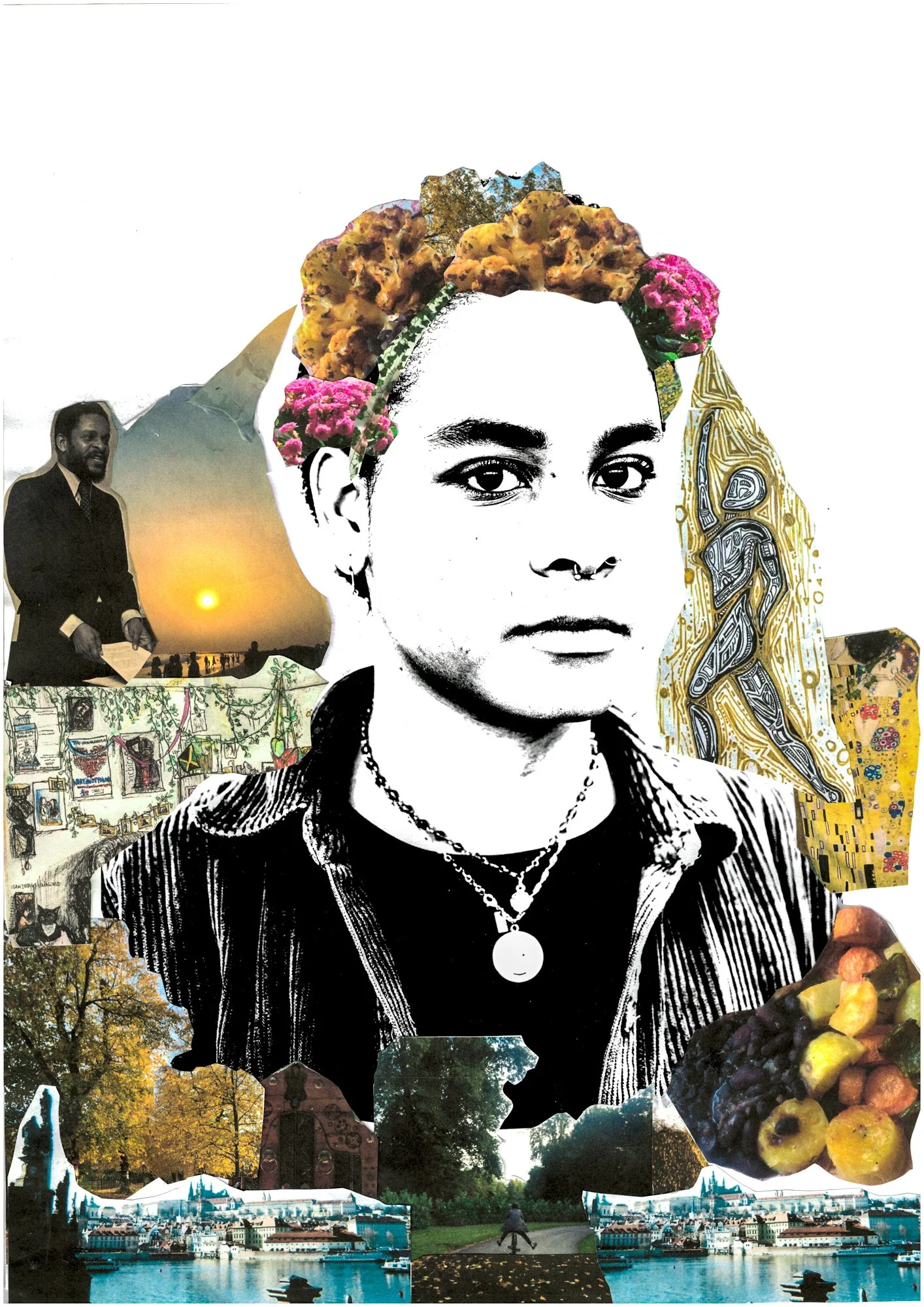
Copy of Idara, Mosaic Clubhouse
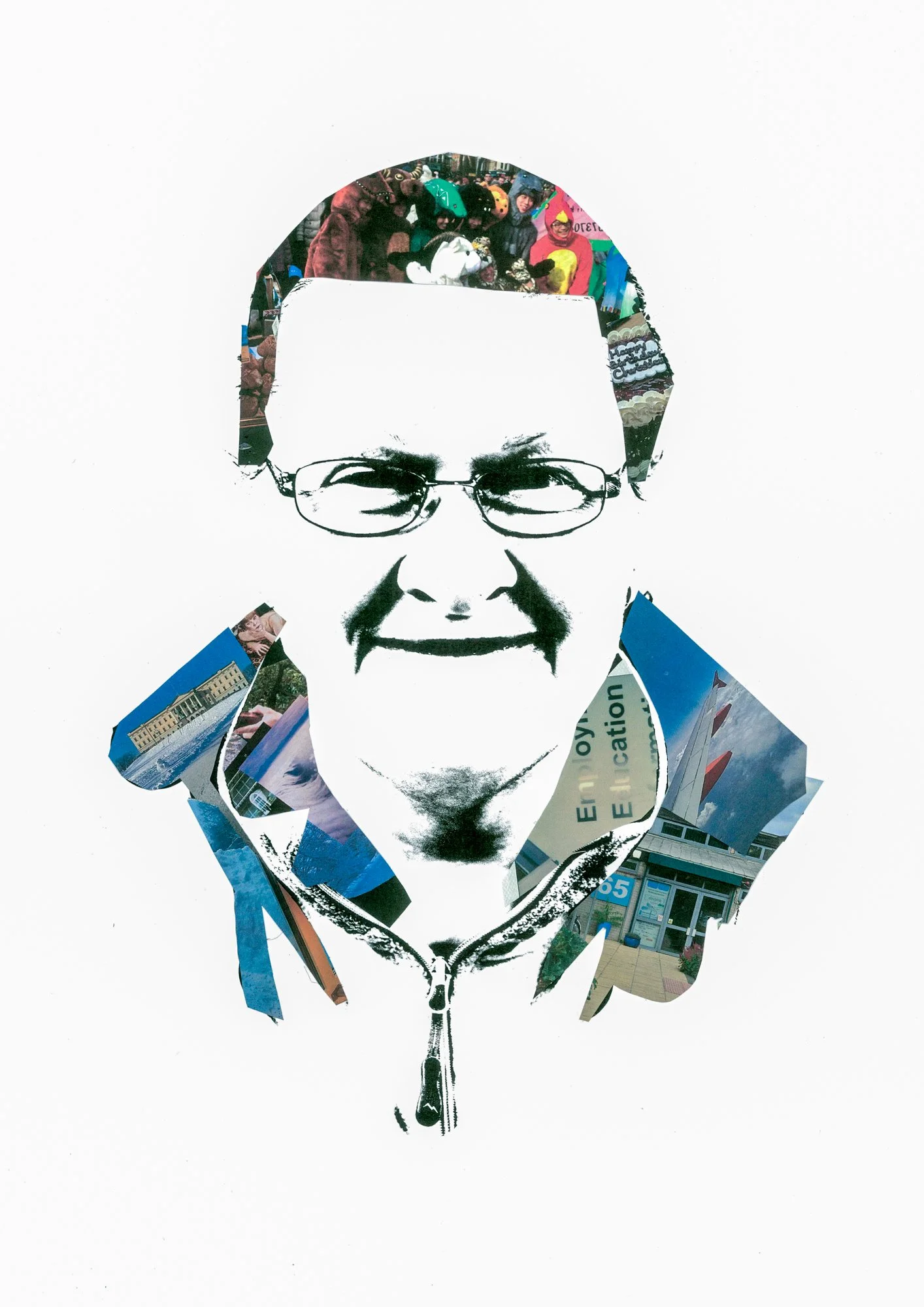
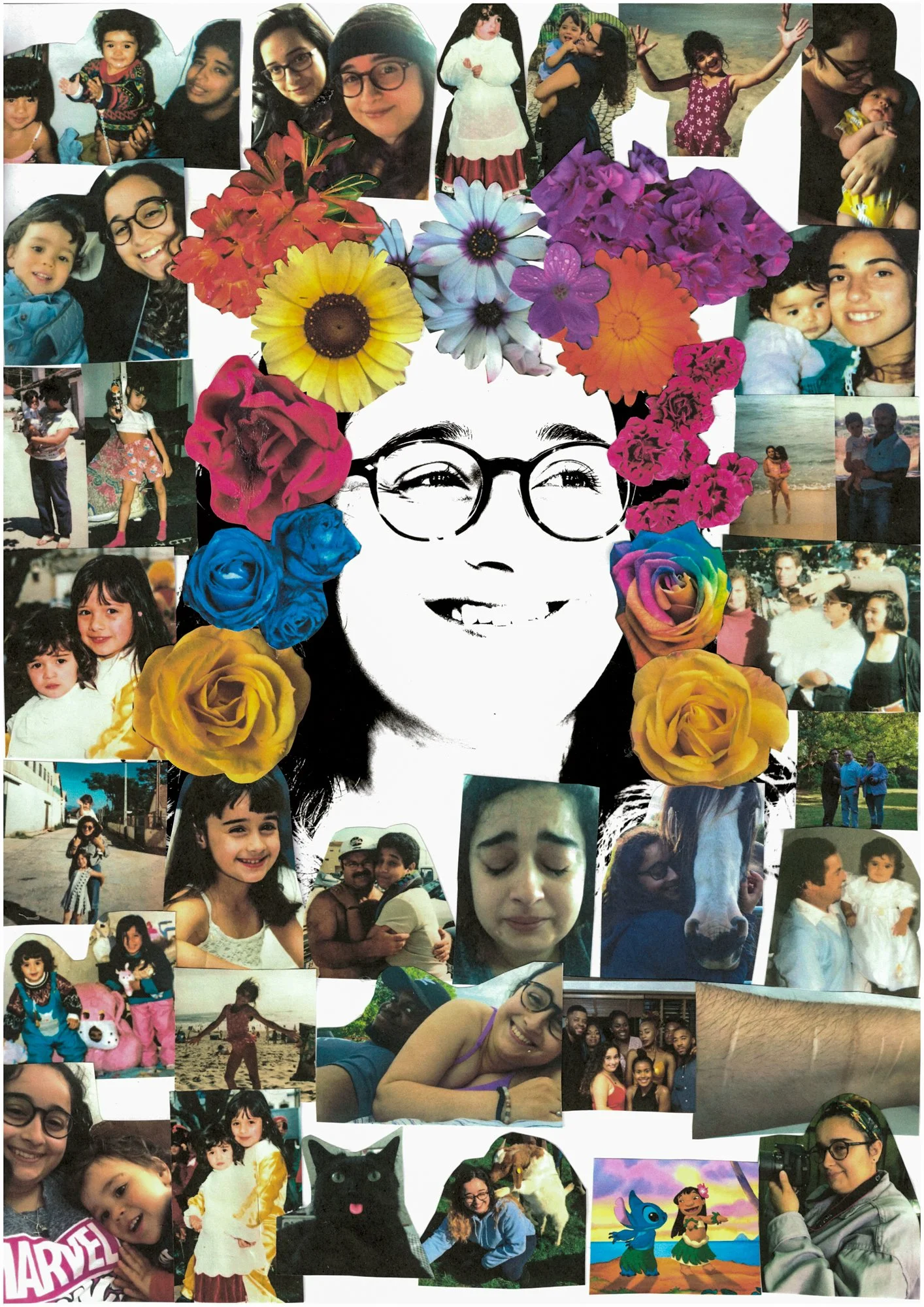
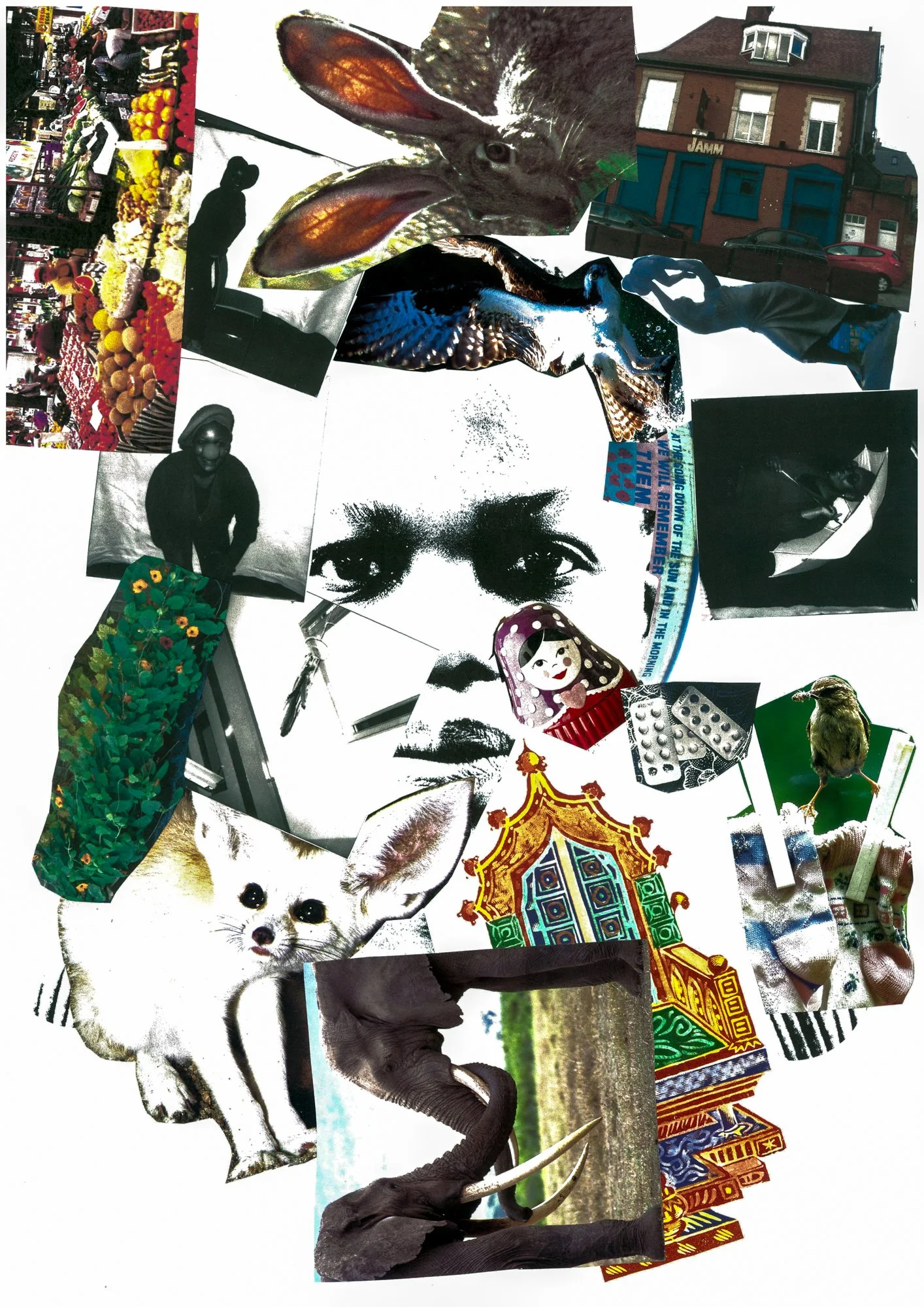
Sam: So for this project I was given Brixton, which turned out great because I was looking at what to do there and I saw Mosaic Clubhouse. So instead of service users they call them members, and the members help with running it, which helps their rehabilitation. Members could be helping out in the kitchen, putting data into spreadsheets, helping to run some activities, so they try and encourage people where possible to get involved, and I guess that helps build community and helps their mental health as well. So that’s their model in its most basic terms. It had a nice community vibe, so the collage portraits were a way of the work being collaborative, and giving people control over how they could decorate their images. It was a workshop technique I’d done before, and I thought would work as a standalone project. I visited when I was able to over a period of two years, and we used what we had at the clubhouse which was an A3 office printer and a scanner. I’d do a portrait in black and white, almost a stencil, which people decorated with images that they’d chosen.
Holly: What was the response from the members doing the collage portraits?
Sam: Well the first thing is ‘Why are you here?’, and obviously lots of people don’t want to take part and that’s fine. But some people were like ‘yeah that’ll be fun’, because it’s just an hour to be creative, and then other people took their time and were really delicate with it. We weren’t sure of the outcome or what specifically it would be, but people that were up for it seemed to enjoy taking the time out to make something and reflect on themselves as well, which when you’re referred somewhere for your mental health, you do quite a lot anyway. But yeah, collaging’s great because it’s a way of reflecting without using words, just doing it instinctively. It can be quite helpful. So yeah, I think people enjoyed it.
Holly: That’s interesting, using collage as a tool to help people express themselves. Even if they don’t really know what they’re expressing.
Sam: Yeah, and it’s just a way of giving people a bit of agency. I did documentary photography, which has a rich history of social issues and capturing vulnerable people, but the only problem with that is sometimes you go into a place, document it and get to come out again. And a lot of photographers have made amazing work but it can be problematic sometimes. Particularly when you’re working with people with long term mental health needs, or just people who are vulnerable in general, and I was very aware that I’m going into a place where people feel safe. So that’s why the collaging is good, because it feels more two-way and collaborative, rather than me capturing my perception of what people would look like. Which is why the portraits are quite varied, some of them are smiley, but most of them are serious or deadpan.
Holly: It seems like a lot of the projects you’ve worked on have a collaborative aspect, why do you feel it’s important in a creative process?
Sam: For my first project Lingering Ghosts, where the asylum seekers had scratched out faces, I was really happy visually with how that came out and the photobook but seeing it up on a wall in a gallery - although people were anonymous and they agreed to the project - it made me more aware of how I was treating vulnerable people that I’m photographing. I’ve done workshops with refugees and asylum seekers since and I’ve asked them, do you think it’s ok for me to make money out of this project? And I’ve had different answers there like, ‘Oh, you’re a photographer so it’s fine’, or ‘Actually if you’re giving the money to raise awareness then that’s good’, or maybe no, all the money should go to refugee charities. But I think when you’re making money off showing vulnerable people you have to really consider how you’re doing that and why. So my practice since then has been about considering how best to do that really. That’s why collaborative, socially engaged photography is really important. It’s just a nicer process as well, it helps me understand the issues a bit more. In some ways we’re always going to be using other people's stories, but we just try our best to do it in a way where people feel comfortable.
Holly: It’s great that you aim to be socially aware while documenting what’s happening. So what initially drew you into photography? What informs your practice?
Sam: I mean, now I’ve got a baby and I need to earn a living, so that’s a big motivation. Yeah, clichè but when I was sixteen my Dad gave me a little camera and I loved it. I wasn’t very academic at school, but when I got a camera it seemed to come quite naturally, and I was inspired by photographers like Don McCullen, James Nachtwey, Lewis Hine. And Tim Hetherington. All men I’m afraid. They were all photographing more extreme situations, and I was naturally drawn to those topics as a teenager. That led me down the path of documentary photography, so I’ve always been interested in social issues but I’ve been drawn to art as well. I guess I’d say I’m more interested in visual art as a whole than exclusively photography. But that’s how it happened.
Holly: Your Lingering Ghosts portraits definitely had a painterly feel, where the faces had been scratched out it almost looked like brushstrokes. I guess that’s you pushing the limits of photography or printing?
Sam: Well maybe. I mean, I’m interested in what you can’t photograph as well, so the purpose of the scratching is to show the loss of identity they feel and the long period of time the people have been in those situations. How do you capture that? So I’m interested in what you can’t photograph as well.
Holly: Yeah love that, the unseen behind the image. So the exhibition coming up at Newhouse is for Mental Health Awareness Week. How do you feel that photography could benefit mental health, or how does it relate?
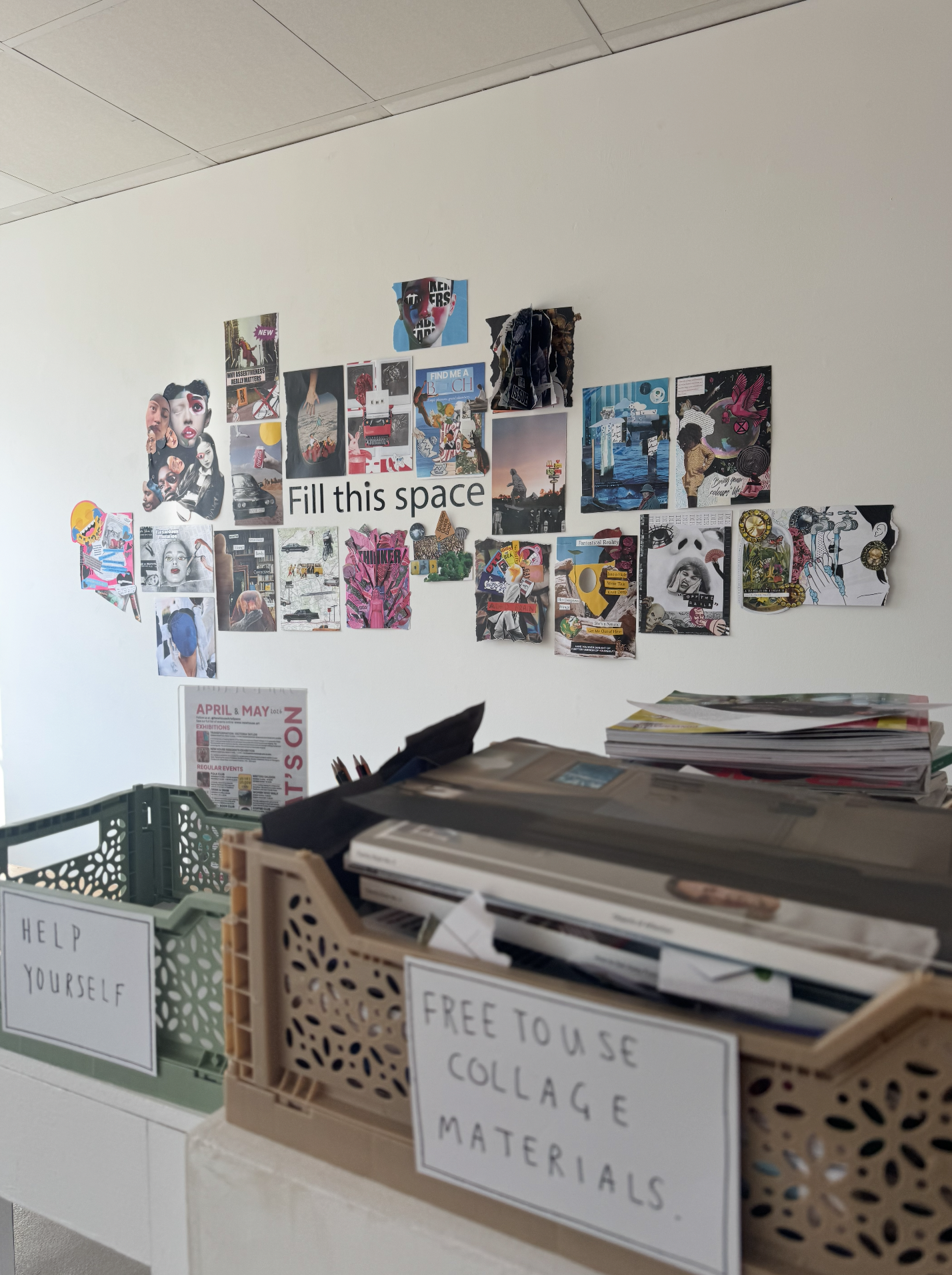
Where the audience was encouraged to make their own collage at New House Art Space
Sam: When you said that, the first thing I thought of was a workshop I did. So I volunteered for three days at Patchworking Garden Project in Dorking. They’re a socially prescribed garden so people get referred there, and I did an exercise where people were capturing stuff all around the garden. Photography is great at making you look and observe, which sounds obvious but people noticed things in the garden that they’d never seen before, even though they’d been there for months. In the last couple of years I’ve gotten into the habit of printing off these small, 4x6 images and putting them in a little card frame, especially with younger kids because so many images are digital now, so when they get a physical print it’s really special for people. But yeah, seeing people go round the garden, noticing things they hadn’t seen before and then making a unique piece of artwork, I think most people found that really rewarding.
Holly: That’s wonderful, that they could find something new just by looking through a lens. So what have you got lined up for the workshop and installation, and will you be displaying the Mosaic Clubhouse portraits?
Sam: Yeah, so, it’s interesting as it’s got two stages. The first stage is the beginning of May, where I’ll invite audiences to make their own collage artwork which will fill the space. So that’ll be exciting to see what people come up with, because there’s not really any limits other than the material that’s there, so magazine clippings and then some scissors and glue. And then I’ll have a couple of questions to prompt people, which will probably be focused on people’s wellbeing and the mental health month. Then on the 7th of May we’ll be inviting people to make their own collage portraits, which should be a nice couple of hours. It’s normally pretty therapeutic and a good chance to get to know each other and what’s important to different people as well. It’s interesting what people choose to put alongside their face. Food often comes up, holidays, family, but occasionally there’s other stuff in there that’s a bit more surprising. For the main exhibition we’ll be displaying the Mosaic Clubhouse portraits for the first time from 21st May to the 5th June, with some of the publics’ artwork alongside.
Holly: Sounds like fun! It’s going to be really interesting to see how people come and take part. So my final question is what are you hoping that people will get out of these activities?
Sam: With the workshop I hope people can come away with a picture they’re happy with. With the installation it would be really nice if it gave an opportunity for people to reflect and be a bit vulnerable. Also, it’s a chance to share their experience of their wellbeing in a safe, almost anonymous way, if they want to. That’s more about a chance to share experiences, and I hope people come away feeling less isolated, knowing that there’s other people in Guildford and the surrounding area that feel similar. With the Mosaic Clubhouse portraits I hope audiences can read the stories and get a sense of the community that Mosaic Clubhouse has. Because it’s such a warm, welcoming place.
Sam Ivin’s exhibition will run throughout May during Mental Health Awareness Month.
Join the free collage workshop on the 7th May between 17.00 and 19.00, and come along to a private viewing on the 22nd May between 18.00 and 20.00 to meet the artist.