
On display at New House Art Space from 6th March until 6th April 2026
By Professor Jane Ogden
Shoes have been the bane of my life; I’m 5 foot 11 and wear a size 9. School shoes were always too tight and painful (they only made up to a size 7 back then), family parties involved the stressful search for posh shoes, and my mum whispering, “Do you make them any bigger?” was mortifying. As the years went by, sizes got bigger, but my fashion had already evolved to include boots and skirts or jeans, to avoid shoes at all costs. Then happiness as the trainer boomed, and suddenly I could wear them to work, on a night out (even with a dress!) and if I ever get married again there are white sparkly ones too. Trainers have changed my life!
Last year I carried out interviews with women about footwear and the role of trainers in their lives, and identified key themes such as comfort, sexuality, power, femininity and freedom. It wasn’t just me who found footwear interesting! This all felt very visual and I started to picture ways to celebrate trainers through art.
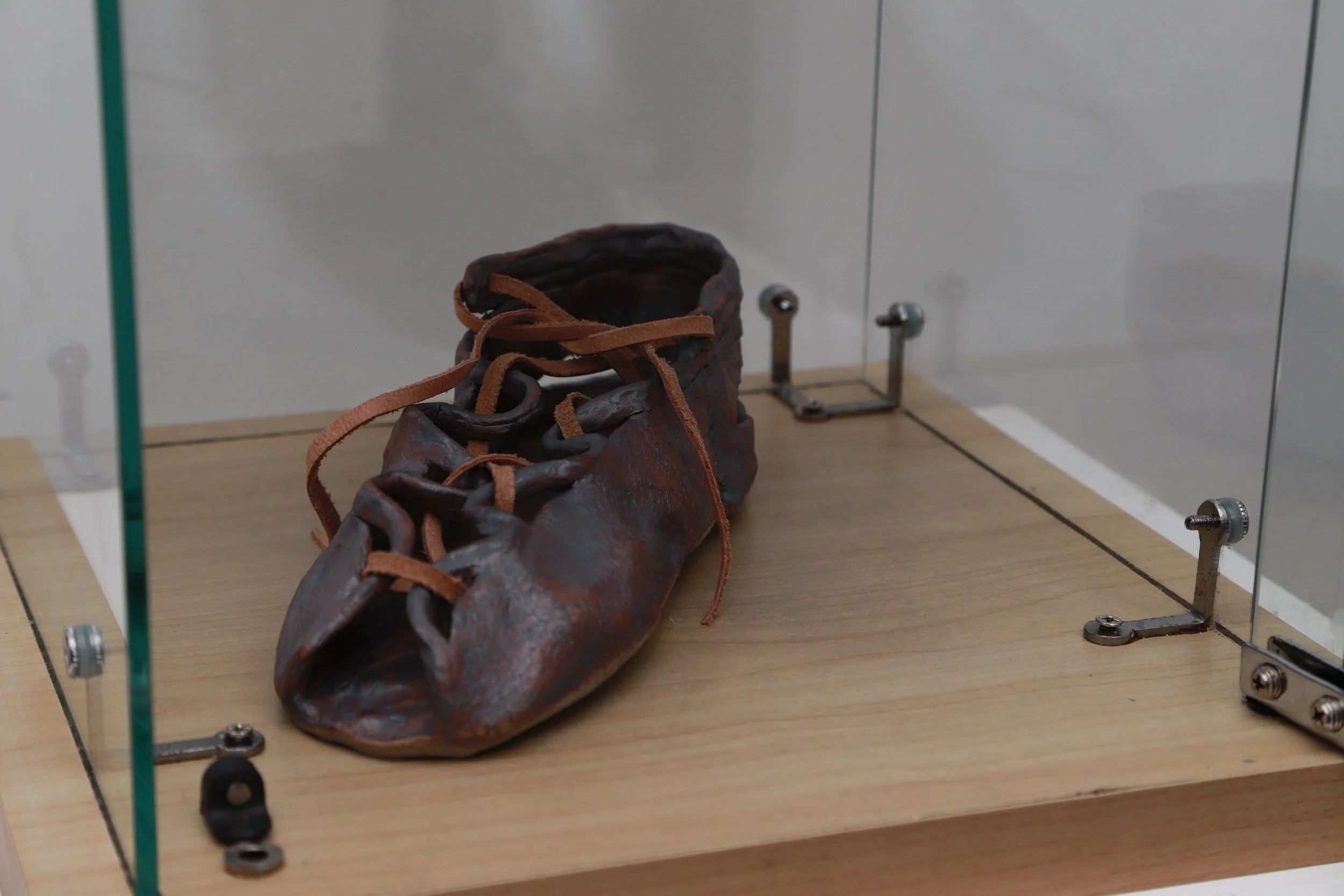
International Women’s Day falls on 8th March in 2026 and this seemed the perfect time to build an exhibition around women’s journeys from heels to trainers, and the complex role footwear plays in our lives. I’m collecting art in every form and hoping that people will use the exhibition to play with ideas around footwear in all its shapes and sizes. The exhibition will contain photographs, film, paintings, pottery and crochet, as well as a bridal mannequin (with matching sparkly bridal trainers) and a wall of damaged feet. I hope it both reflects the breadth of local talent, and does justice to the pivotal role trainers have had in my own, and other women’s, sense of freedom.
“I'm so aware now of how ridiculous women's footwear is. I've got corns on the sides of my feet from my school shoes. And where women's shoes are pointy - my little toes point inwards rather than how they're supposed to be, flat. And I know so many people that have bunions or just weird feet. So many people hate their feet because of it.”
Original text
Shoes have been the bane of my life; I’m 5 foot 11 and wear a size 9. School shoes were always too tight and painful (they only made up to a size 7 back then), family parties involved the stressful search for posh shoes, and the embarrassment of hearing my mum whispering, “Do you make them any bigger?” was mortifying. So as soon I could, I wore unisex Doc Martens, Converses, karate shoes from the box outside the shop, and bought from the odd London shop that went up a size. As the years went by sizes got bigger, but my fashion had already evolved to include boots and skirts or jeans, to avoid shoes at all costs.
Then happiness as the trainer boomed, and suddenly I could wear them to work, on a night out (even with a dress!) and if I ever get married again there are white sparkly ones too. Trainers have changed my life!
Last year I carried out interviews with women about footwear and the role of trainers in their lives, and identified key themes such as ‘comfort’, ‘sexuality’, ’power’, ‘femininity’ and ‘freedom’. One woman described how practical her trainers were, saying, “I'm a really lazy person and trainers are just comfy, I can wear them everywhere. I can wear them walking the dog. I can wear them at work and I used to go to protests and things like that, and could stomp around London all day.”
Another described how her trainers helped her to feel more feminine: “I wore a dress I wouldn't usually wear - a little red summer dress. I thought about what to wear with it and I wore trainers, as I usually feel a bit self-conscious if I'm too dressed up. I usually wouldn’t really like it, but wearing trainers with it makes me feel like, I'm just like having a fun time in a summer dress.”
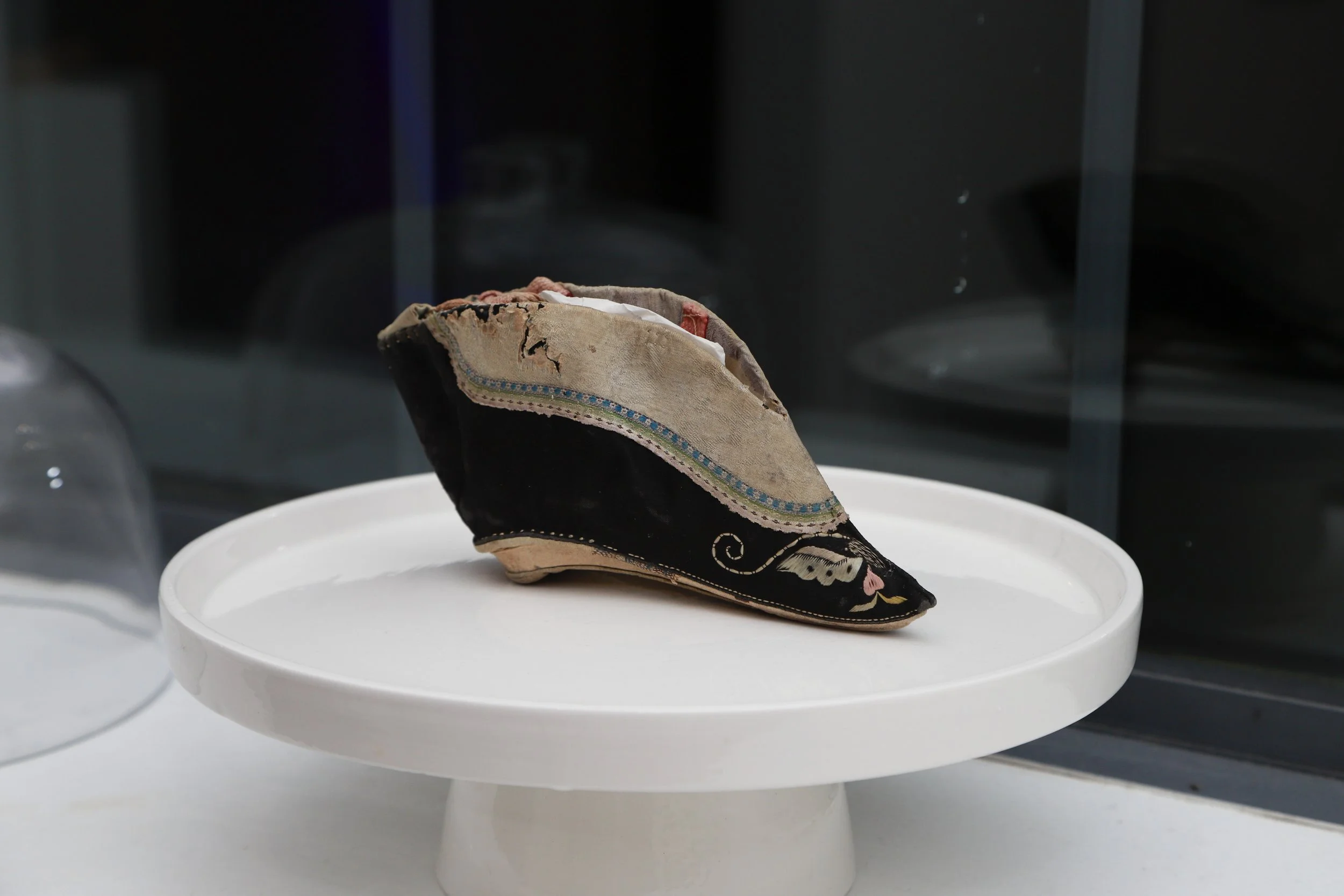
I also heard stories of women going dancing in high heels, taking them off, cutting their feet on glass and walking home barefoot; carrying their high heels home after a late night and being given flip flops by the local ‘Angels’; wearing ballet pumps in the snow and getting chill blains; having pumps that smell so much they lived on the window sill. And many described their damaged feet as a result of the ill-designed shoes they were forced to wear.
“I'm so aware now of how ridiculous women's footwear is. I've got corns on the sides of my feet from my school shoes. And where women's shoes are pointy - my little toes point inwards rather than how they're supposed to be, flat. And I know so many people that have bunions or just weird feet. So many people hate their feet because of it.”
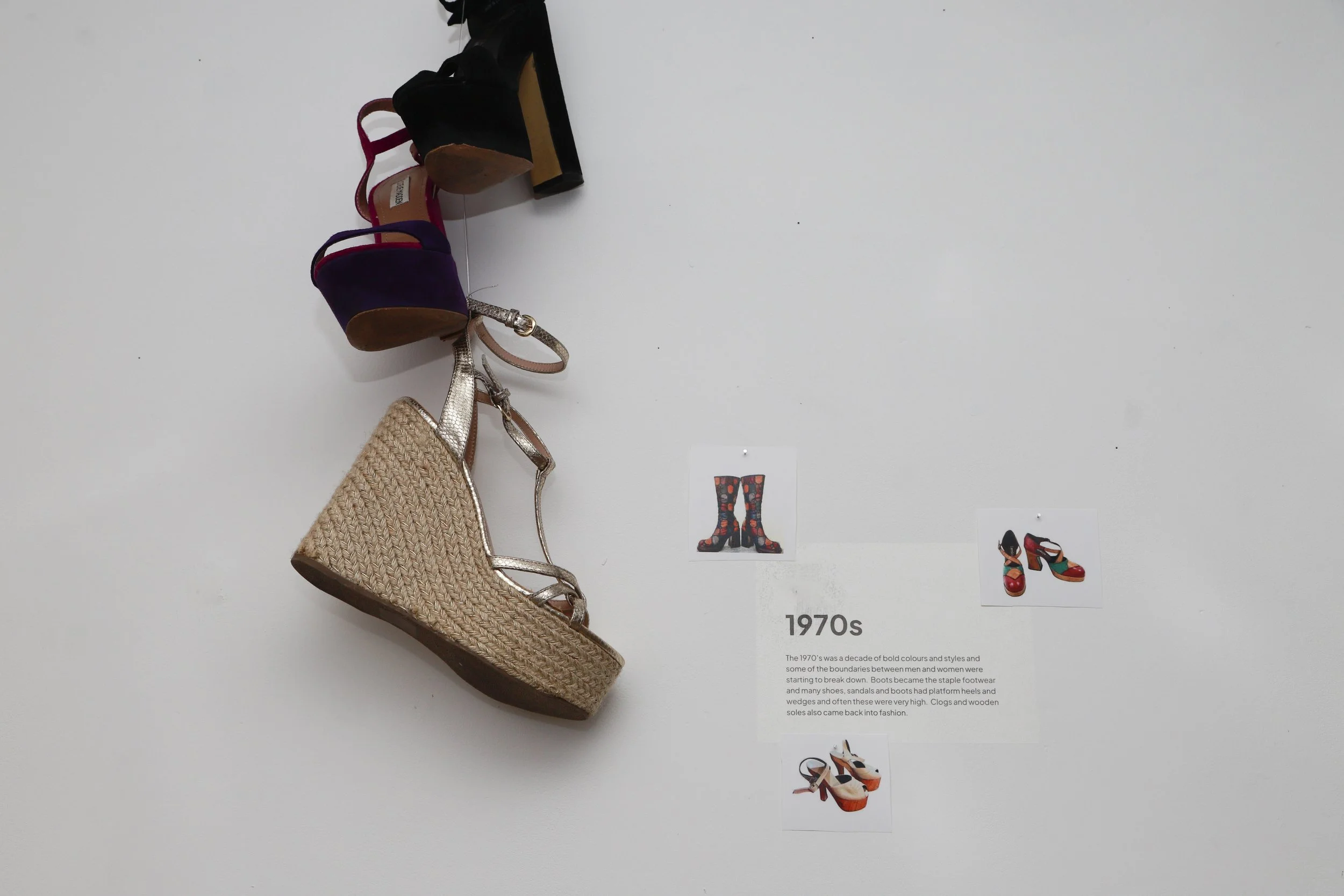
But not all shoes are bad. Some women also described high heels making them feeling powerful, in control and assertive at work and sexy on a night out. They were also considered a rite of passage into adulthood. And Doc Martens were heralded as the key to having power.
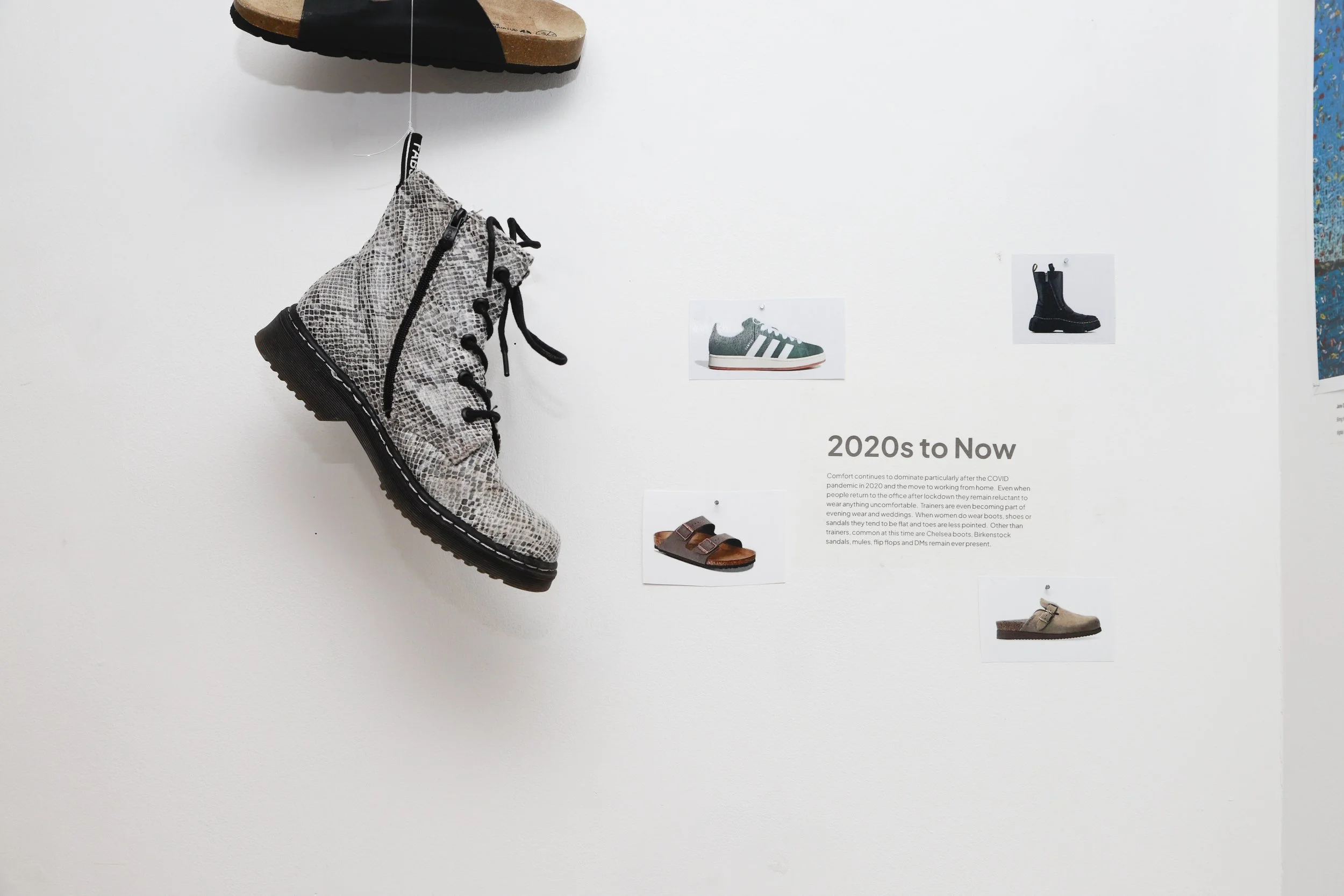
“Doc Martens are really big in the queer community and so I suppose I’m more drawn to those kinds of shoes. It's a very empowering thing, especially the move away from traditional shoes into a non-gender specific thing, so I suppose that's quite empowering for women.”
It wasn’t just me who found footwear interesting! This all felt very visual and I started to picture ways to celebrate trainers through art.
International Women’s Day falls on 8th March in 2026 and this seemed the perfect time to build an exhibition around women’s journeys from heels to trainers, and the complex role footwear plays in women’s lives. Thanks to the New House Art Space in Guildford this will be on display from 6th March to 6th April.
I’m collecting art in every form and hoping people will use the exhibition to play with ideas around footwear in all its shapes and sizes, as well as the role of the trainer in women’s lives. The exhibition will contain photographs, film, paintings, pottery and crochet, as well as a bridal mannequin (with matching sparkly bridal trainers) and a wall of damaged feet. I hope it reflects the breadth of local talent, and does justice to the pivotal role trainers have had in my own, and other women’s, sense of freedom.